In the vast diaspora of reggae, some voices travel across oceans before landing where they belong. Avaran, born in the Bahamas, raised with the fire of sound-system culture, tested on stage with legends, and silenced for a time, is now back. With new music on the horizon and a renewed sense of purpose, Avaran opens up about his beginnings, his creative philosophy, and the faith that fuels his sound. What follows is a candid, question-by-question interview that maps his evolution: from dubplates to spiritual one-drops, from heartbreak to prophecy, from disillusionment to reclamation. The conversation with Avaran isn’t just about comeback, it’s about purpose, growth, work ethic and integrity. From the dubplates of Cancer High Power to self-produce his own music; from sharing stages with icons to reclaiming his voice after a painful hiatus: his story is an example of artistic resilience with a full album on the way.

🎙️ The Interview
Gege Vibes: You were born in the Bahamas. Let’s start from the beginning: how did the sound system culture influence your entry into music?
Avaran: In the early days, sound system culture laid the foundation for my journey into the music business. My first steps came through cutting dubplates for a Bahamian sound system called Cancer High Power. Whenever the selector went to the studios, he would call me in to record dubs, giving me my first taste of the recording process and the energy of sound clash culture.
Cancer High Power wasn’t just the first to bring me into the studio, it was also the first sound system to champion my music on the airwaves. Through his sets, my voice reached beyond The Bahamas, landing on WLRN Radio in Miami, where the legendary Clint O’Neill often featured Cancer High Power’s selections. In dubplate style, my songs carried across borders, earning spins that introduced me to a wider audience.
This foundation in sound system culture didn’t just give me exposure — it shaped my identity as an artist. The raw, community-driven energy of sound clashes and dubplates molded the way I approached music, ensuring that from the very beginning, my sound was rooted in authenticity and connection.
GV: You shared early stage shows with heavyweight and legendary reggae names. What do you remember most about those first big performances?
A: Beyond the sound systems, my growth as an artist was shaped by the stage shows I performed in the early years alongside reggae greats like Luciano, Sizzla, Mikey General, Capleton and Yami Bolo. These concerts were at a time when live reggae shows carried a certain raw authenticity — before the digital era changed the way audiences experienced performances.
One show that stands out is the bill with Luciano, Sizzla, and Mikey General. The energy that night was unforgettable — not just because of the powerful lineup, but because the crowd was filled with Bahamians who cheered me on like family. Many of them still talk about that performance today. Those moments gave me confidence, rooted me in community, and reinforced that my music carried weight both at home and abroad.
Each of those shows — whether with Capleton’s fire or Yami Bolo’s roots — cemented my belief that reggae’s live presence is more than entertainment; it’s a spiritual exchange. They remain highlights of my journey because they weren’t just concerts, they were rites of passage.
GV: Many listeners compare your voice to the late great Garnett Silk. How do you feel about that comparison and how do you preserve your own identity as an artist?
A: In my younger days, many people compared my voice to Garnett Silk. To even be mentioned alongside such a legendary artist was an honor. Garnett Silk’s voice carried a spiritual weight — soulful, unforgettable — and I understood why people heard echoes of him in me.
Over time, though, I’ve worked hard to mold my own sound. While certain inflections and tones may still remind listeners of Garnett, I believe what I’ve developed today is distinctly mine. Artists with that type of voice — warm, melodic, and rooted in roots reggae — tend to leave lasting impressions. I’m grateful those comparisons were made, but my focus has always been to walk my own path musically, while carrying that same spirit of depth and authenticity.
GV: Who have been the major musical influences shaping your writing and delivery?
A: For me, artists like Beres Hammond, Half Pint, and even crossover artists like Doug E. Fresh are nothing short of legendary. One of my earliest international shows was in Cannes, France, at the MIDEM Music Conference, where I had the honor of opening for them. The energy of that night was unforgettable.
After my performance, Beres Hammond personally approached me and invited me to Jamaica to record songs with him. It was a powerful moment of recognition, one that could have shifted my career overnight. But at the time, I was bound by an exclusive record contract, and my label wouldn’t allow it. As disappointing as that was, I had no choice but to move forward, keep creating, and let the journey unfold in its own way.
Looking back, I see that moment as both a missed opportunity and a reminder: the respect of legends means something real. Even if circumstances didn’t allow the collaboration, the acknowledgment fueled me to continue building my own path.
GV: Your single Who Shall Jah Send has drawn attention for its spiritual depth. What inspired that track and what message are you delivering with it?
A: I wrote Who Shall Jah Send during a time of deep reflection. The song draws directly from the Scriptures, where it is said that one shall come who will be crowned King of Kings, Lord of Lords, the Conquering Lion of Judah. To me, the Bible is not just a collection of stories or fairytales — it speaks to real prophecy and fulfillment.
In this song, I am testifying that Jah did send someone. The promise was made, and the prophecy was fulfilled. That’s the meditation behind Who Shall Jah Send: it’s a declaration of faith and recognition that Jah’s word is living, and that His presence is revealed through history.
GV: You initially planned to release a new EP, but now you’re working on a full-length album. What can fans expect from this next chapter?
A: What began as plans for a new EP has grown into something much bigger. Instead of a short project, I’ve decided to move forward with a full-length album. The record will bring together new music alongside select previous releases, creating a body of work that reflects both my growth and my foundation.
The album will feature collaborations with talented musicians from Jamaica, as well as with my younger brother, who is both a producer and a musician. We’ve worked on many songs together over the years, and this project is a chance to bring those creations into one unified work.
I haven’t settled on the title yet, but I believe this will be one of my strongest and most personal projects to date. It’s still a work in progress, but stay tuned — the finished album will be something special.
GV: Another recent track, Love Cry, touches on heartbreak. How do you draw from personal experiences in your songwriting?
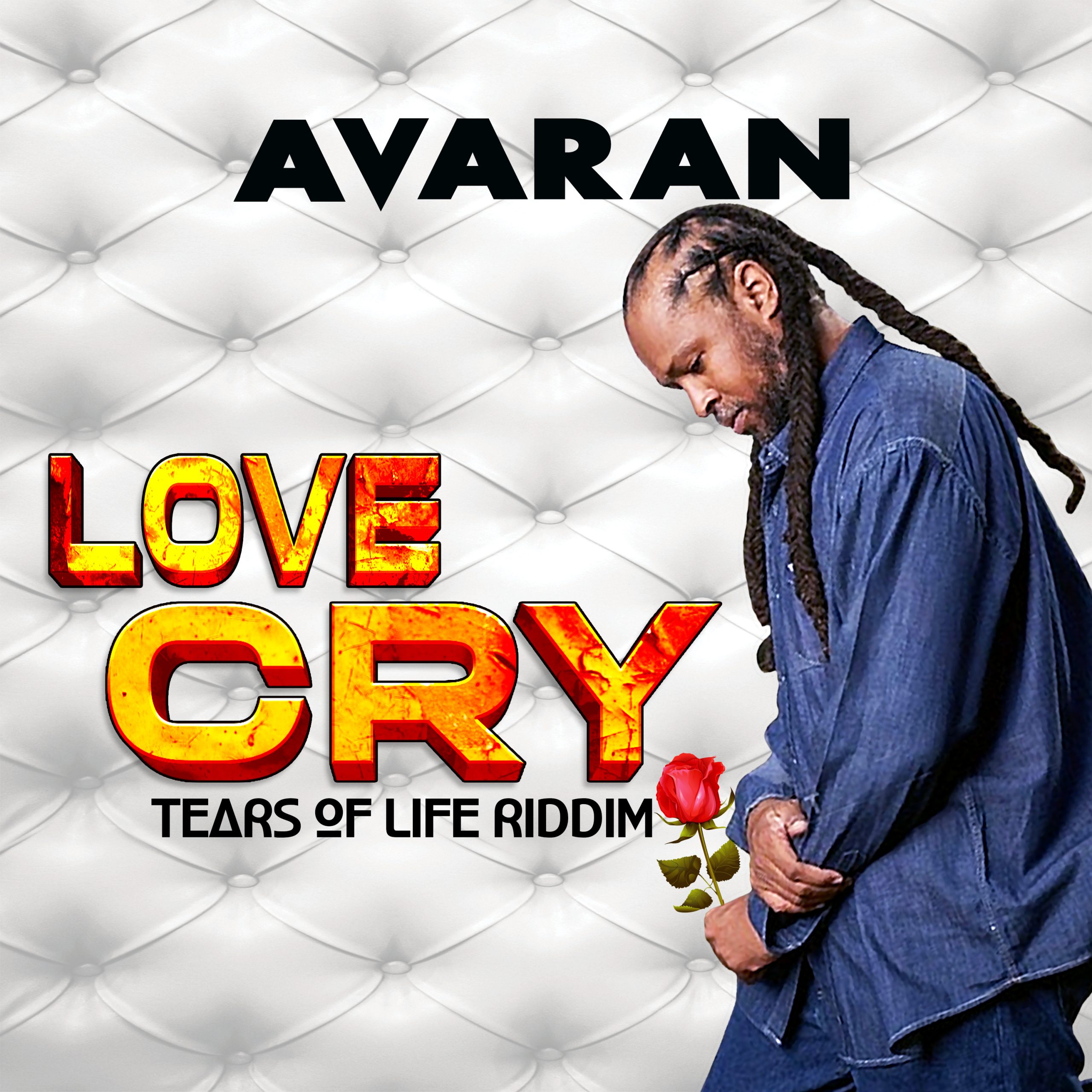
A: Love Cry is a song that speaks to a universal experience — because everyone remembers the first time love breaks their heart. It’s a feeling that cuts deep, and it stays with you. That’s why I say Love Cry is really everyone’s true story. The emotion is self-explanatory: the pain, the memory, and the way it shapes who you are.
Through that track, I channel personal experience into music. It’s honest. It’s raw. And it connects — because heartbreak is something many have lived.
GV: Nowadays you seem more involved in production, mixing and mastering of yours songs. What motivated this shift?
A: Lately I’ve been keeping my productions in-house — from getting my own instrumentals made, to writing, to having direct input on mixing and mastering. I made this shift because too often in the past I wasn’t treated as an equal in the music business. Some producers believed that once you recorded with them, they could shelve the track or claim full ownership.
To protect my music and my vision, I started producing my own records. Love Cry is one example: it was my production before it was later released as part of a various-artists project. Since then, I’ve continued to handle my own productions, while also working with established musicians and engineers out of Jamaica. This way, I keep control, ensure the music sees the light of day and create a sound that is fully mine.
GV: You went through a hiatus after initial success and a strong comeback in Europe, especially in France, in the mid-2000s. What obstacles did you face then and what kept you going?
A: My hiatus from the music business was necessary. Over the years, I dealt with producers and industry figures who took me for granted — people who didn’t treat me fairly and, in some cases, tried to claim what wasn’t theirs. Looking back, I can admit I was taken for a fool at times.
But the break gave me perspective. Today, I approach the business differently: I take my productions more seriously, and I make sure the legal aspects are in order before moving forward. That awareness has made it harder for anyone to come in and exploit my work.
Even with Love Cry — a song that began as my personal production — someone later came in, loved the riddim, and proposed a partnership to expand it into a full-scale project. At the end of the day, they took the entire project, sent it to the distributor under their own label, and locked me out of the analytics and business side of it. It wasn’t fair, and it won’t be ignored. That matter is being dealt with legally.
What I learned is this: stepping back wasn’t a setback. It was preparation. Now I know exactly how to protect my music, my business, and my legacy.
GV: Receiving rotation airplay in Jamaica must be meaningful. What does it mean for you to have your music heard where reggae was born?
A: Being played on Jamaican radio stations like IRIE-FM is deeply important to me because Jamaica is the birthplace of reggae music. To have my songs spinning there is not just airplay, it’s validation from the very source of the culture that shaped me.
I’m grateful for the support I’ve already received in Jamaica, as well as in Europe and Africa, and I hope it continues to grow. With the new music that’s coming, I believe the momentum will only build stronger. To hear my songs reaching listeners worldwide, starting from the root in Jamaica, is one of the greatest rewards of this journey.
GV: Looking ahead any dream collaborations or upcoming plans you can share?
A: Over the years, I’ve had the privilege of collaborating with artists like Luciano and Michael Rose. While I don’t currently have plans to work with Beres Hammond or Sizzla, I remain open to collaborate with any of the great artists who are putting out meaningful music.
For me, collaboration isn’t limited by geography or genre. While reggae’s roots are in Jamaica, I also see the strength of the music coming from Africa and Europe, where incredible reggae and world artists are carrying the torch. As long as the music is uplifting and true, I’m ready to build with any artist who shares that vision.
Eugenia Conti